




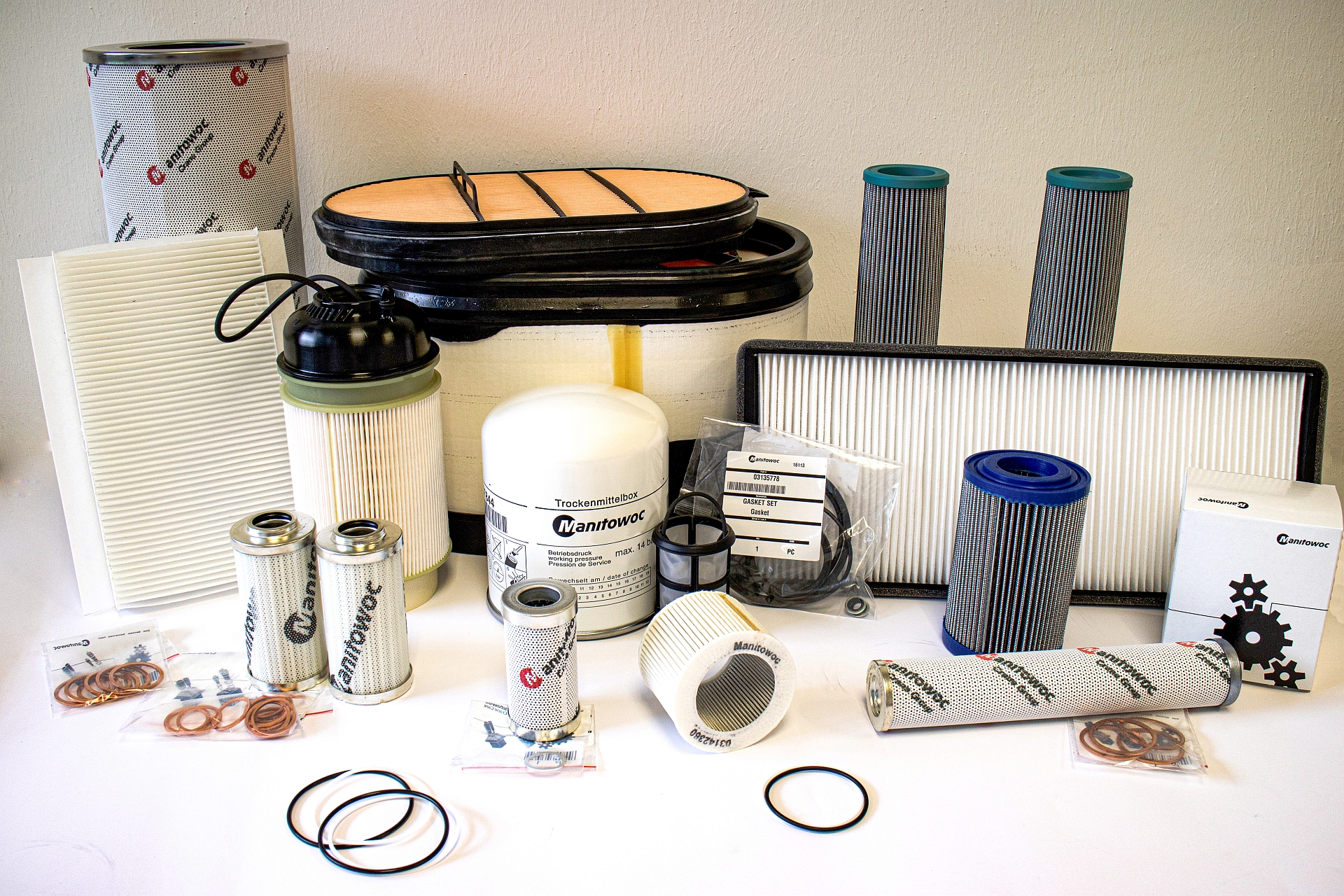
Understanding the hidden risks of generic parts in crane maintenance
- They might appear to be a good alternative to OEM originals, but counterfeit or generic parts are often manufactured without adhering to the rigorous specifications and quality standards set by the original equipment manufacturer.
- Generic components often require more frequent servicing or replacement, eroding initial cost savings and increasing downtime.
- The use of non-original components can invalidate regional certifications or warranties, exposing crane owners to legal and financial risk, and workers to safety risks.
Generic parts are a growing but often overlooked threat to the crane industry. While they may cost far less than genuine components, they are not true substitutes—and the hidden risks of non-original parts can quickly outweigh any short-term savings.
“The lower price point of generic parts can make them seem an attractive option,” said Yannick Richaud, director of customer support for Manitowoc in the Middle East. “However, operating cranes with generic parts can have devastating consequences. These components are often manufactured without adhering to the rigorous specifications set by original equipment manufacturers and do not comply with strict quality control, testing, and validation processes that ensure reliability. As a result, they introduce serious safety hazards and operational risks.”
Many of the parts used in Grove, Potain, and Manitowoc cranes have proprietary design specifications that are not available to other parties. This can include strength margins or other factors that affect the functionality of the components. Even seemingly simple parts, such as bolts, brakes, and consumables like boom grease, are factored into the engineering design of Grove, Potain, and Manitowoc cranes.
Manitowoc invests significant time and resources in product development, verifying crane performance at its Product Verification Centers to ensure consistent quality and reliability. Generic suppliers cannot provide the same traceability or consistency, and non-genuine parts may lack the proper materials and specifications, increasing the chance of failure or unpredictable behavior under load, and putting the safety of workers and others at risk.
 Enlarge image
 Enlarge image
Half price, half lifespan
Because generics are typically manufactured with lower-grade materials to reduce costs, their lifespan is often significantly shorter than genuine parts. This means they must be serviced or replaced more frequently, eroding initial savings, increasing downtime, and potentially endangering the jobsite. In many cases, opting for a cheaper alternative does not make financial sense in the long-term, and introduces additional risk for owners.
“As a manufacturer, it is in Manitowoc’s interest to maintain the high value of our equipment,” said Yannick Richaud. “Generic parts can cause premature wear of other components because they are built by companies that do not fully understand the overall specifications of a crane or are solely focused on profit. At Manitowoc, we engineer our cranes to offer reduced maintenance frequency, limited wear of components, and minimized downtime. Introducing non-OEM parts into these cranes puts the long-term performance and value of a crane at risk.”
Real consequences
Beyond operational risks, generic parts can expose crane owners to additional consequences. One of the most critical considerations is the loss of manufacturer support. Load charts for Grove, Manitowoc, and Potain cranes are invalidated when non-OEM components are used. If a structural component is repaired in an unknown way; or an OEM component is replaced with a generic component, the load chart for the crane is no longer valid. It’s worth keeping in mind that while some generic parts suppliers may offer limited warranties, these typically cover only the part itself, not any resulting damage to the crane.
Additionally, the use of non-original components will invalidate regional certifications and OEM warranties. In practical terms, that means operators and crane owners could be held responsible, even if a relatively inexpensive non-original component causes extensive downstream damage. Genuine parts, on the other hand, allow crane owners to benefit from high-quality technical support, helping maximize uptime and protect the long-term value of the equipment.
A growing global problem
The issue of generic parts is especially prevalent in regions with limited regulatory oversight or where enforcement of safety and material quality standards is less stringent. Manitowoc and other manufacturers have identified generic versions of all kinds of components, from small parts to complex structural elements like mast sections for tower cranes or jib extensions for mobile cranes.
“Manitowoc views the reliable operation and productivity of its cranes as essential pillars to project success. Cutting corners on critical components is a risk no crane owner or operator should ever take,” Richaud said.
CONTACT
Crystal Chi
Director Marketing-Emerging Markets
Manitowoc
T +86 21 6457 0066
crystal.chi@manitowoc.com
GROVE
Grove is the world leader in mobile cranes. For nearly a century, Grove has delivered best-in-class performance and groundbreaking technology through its range of rough-terrain, all-terrain, truck-mounted, military, industrial and telescoping crawler cranes.
MANITOWOC
Manitowoc is the world’s most celebrated maker of crawler cranes. Its cranes have remained at the top of the lifting world for a century, and Manitowoc continues to deliver technological breakthroughs that enhance load charts, increase efficiency, improve transport, simplify erections and earn owners exceptional return on their investments. With so much innovation at its core, it’s no wonder the very name “Manitowoc” is synonymous with crawler cranes.